We opened the door, and there were the swiftlets. There were nests, and there were eggs.
In part one I wrote about the plane that would not fly — up to the point where, unable to leave Kansai, we went via Taipei and finally reached Johor Bahru.
This is where the real subject of the trip begins.
Everyone together at Senai Airport
The person who met us at the airport was Eric Shak of GLYKEN. Here we also joined up with the group that had arrived ahead of us from Haneda via Singapore.
We boarded a bus straight away. Our destination was Desaru, a coastal area east of Johor Bahru.
The town thins out, and the green comes in
As we drove, the scenery changed. Fewer buildings, fewer cars, more green. The birdhouse we visited stood in a place where the surrounding nature had been left as it was.
The edible bird’s nest we normally see has been processed and put into a bag or a box. But upstream of that is the environment itself, where birds fly, live, and build nests. That was what I most wanted to see on this trip.
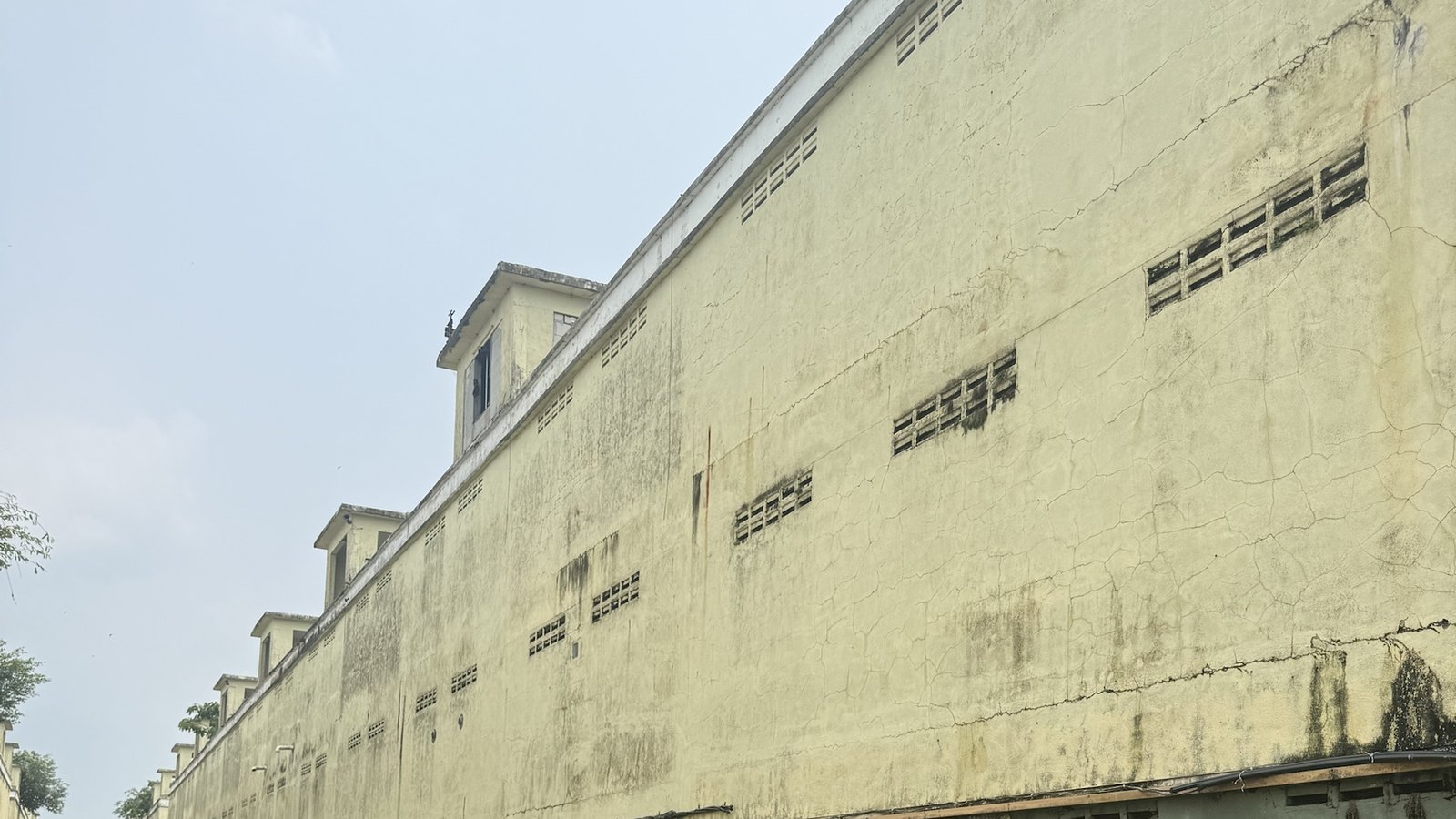
We opened the door, and there were the swiftlets
From the outside alone, you cannot tell what it is like inside. We opened the door and went in.
Inside the dim building there were a great many swiftlets. On the walls, nests that had actually been built. Look closely, and some of them had eggs in them.
The people travelling with us made sounds of surprise too. If you only know edible bird’s nest as a product, then even if you understand in your head that it was made by a single bird, it is hard to feel it. But here the bird is in front of you, and the nest, and the egg. It arrives not as knowledge but as something happening in the room.
Harvesting a nest with my own hands
On this trip I was also allowed to try harvesting a nest with my own hands.
The arrangement was that a nest in a condition where it may be taken is harvested under local supervision. Nests with eggs or chicks in them are not touched. This is an important point, so I am writing it plainly. The judgement of when to harvest is what shapes the relationship between swiftlets and people. I have written about that in Is it all right for the swiftlets if we take the nests?
Taking one nest with my own hands. Touching, at its starting point, something I had only ever met as a finished product. There was a sense of it that photographs and video do not reach.
The same “edible bird’s nest”, and not the same place
Along the way, we also saw a number of buildings near built-up areas that appeared to be birdhouses.
But I have not verified which of those buildings are under what registration or permit. So I will write nothing here beyond the fact that we saw such buildings.
If there is one thing that is certain, it is that although they are all called “edible bird’s nest”, where and in what environment they were harvested is not the same. That measured values differ by origin is set out in The same “edible bird’s nest”, and yet the figures differ, and what the various schemes do and do not specify is set out in Certifications and standards.
You cannot work back to the process from the finished product
In the afternoon we returned to Johor Bahru, to GLYKEN’s premises, and heard about what edible bird’s nest is and what is currently known about it. The others must have been tired from the travelling, but they were leaning in completely. A question, and then another question.
After that, we were shown the production floor as well. Which step is done in which way, and for what reason. It was explained to us one step at a time.
There is something I want to make clear here. TSUBAMEDIA does not judge products as better or worse than those of other companies. So I will not be writing about who is best. What I can write instead is that a process cannot be read off a finished nest. How many hours it was left to soak. What temperature the water was. Almost none of that shows in the appearance of the finished product. Which means it can only be recorded at the time. I have written about that in Grades look at appearance. They do not look at the process and Has edible bird’s nest been washed?
What I could not write
I also heard about research, and about materials under development. But it has not been decided how much of that may be made public, so I am not writing it here. Once the publishable scope is settled, we will handle it as an editorial article.
Nor will I write about what the components do, or about how anything felt. Edible bird’s nest is a food, not a medicine. What struck me most strongly on this trip was, if anything, the opposite. There is still a great deal about this material that is not known.
WHAT WE DON’T KNOW YET
- For the birdhouses we saw along the way, I have not verified which building is under what registration or permit
- Of what we were told on the ground, anything not backed by a primary source will not be used in editorial articles
- Research and materials under development are not covered in this article, because the publishable scope has not been settled
What this article has not verified
I will go again
This was another whirlwind trip. Airport, car, company, factory, birdhouse, and then the airport again. I have been to Malaysia many times, but I have almost no memory of doing anything that resembles sightseeing.
Even so, there were certainly things I understood because I went to the place, and things I heard because I met the person. This is an age in which anything comes up if you look it up, and in which asking an AI returns something that resembles an answer. Precisely because of that, I think the value of going on your own feet and looking with your own eyes has, if anything, gone up.
I do not want TSUBAMEDIA to be a publication that passes along what someone else said. Go ourselves, and write what we have checked ourselves. This trip is one step in that direction.
I am writing this in an airport lounge in Kuala Lumpur. I fly home on a late-night flight.
DISCLOSURE
About this column
TSUBAMEDIA is published by Japan Bansho Co., Ltd. I am its representative director, and I also head Lien Inc. As of 1 September 2026, I have become the representative of CURERE Co., Ltd. as well. I am not a neutral third party. GLYKEN, which appears in this column, is a business partner of ours.
That is precisely why this column is not written as a reported article. It is written as what one person saw and heard, and what has been verified as fact is kept separate, in the editorial team’s articles. Nor do we compare other companies’ products or judge which is superior.
This has been published with the permission of the people named. The articles linked from this column are, at the time of writing, available in Japanese only.